How to Evaluate a Valorant Cheat Before You Spend Money on One
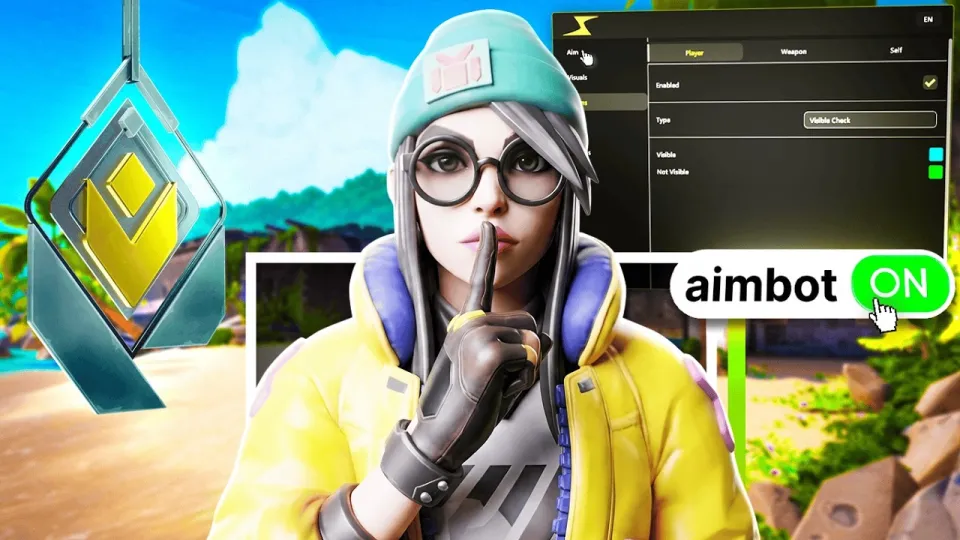
· based on the channel 摄影师骥彬在京都
Key takeaways
- Private Valorant cheat builds are typically sold on subscription or one-time licenses, with instant delivery and discount codes such as ZYON10 for 10% off.
- The core features to verify are aimbot with bone selection and smoothing, silent aim, ESP/wh, and a skin changer.
- Vanguard is a kernel-level anti-cheat, so any cheat claim of being undetected is time-limited by definition.
- A meaningful test means several full matches in high-rank lobbies, not a highlight clip of three shots.
- Account bans in Valorant are permanent and hardware bans are issued for repeat or severe cases.
A Valorant cheat is third-party software that modifies the game client or reads its memory to add aim assistance, wallhacks (ESP) or cosmetic unlocks, and the only responsible way to evaluate one is to check what it actually changes, how it is delivered, and what risk it carries for your account. Any product marketed as undetected is only undetected until Riot's next Vanguard update, so treat every purchase as a calculated risk rather than a safe upgrade. If you want to see what a private build looks like in practice, the vendor page at Zyoncheats private Valorant cheat lists the feature set, delivery method and license options.
What a Valorant cheat actually changes in the client
Every cheat on the market falls into a few technical buckets, and knowing them tells you more than any feature list. Aimbot modules read enemy positions from game memory and move your crosshair; ESP modules draw overlays on top of the renderer; skin changers swap cosmetic IDs locally so only you see the result. External cheats run as a separate process and try to read memory from outside, while internal cheats inject a DLL into the Valorant process and have far more direct access, which also makes them easier for Vanguard to spot. The features that matter most for perceived legitimacy are smoothing curves, randomization and bone targeting: an aimbot locked to the head with zero smoothing looks obviously inhuman in a death cam, while a configurable one that snaps to the upper chest with a delay is much harder to flag visually.
The features worth checking before you buy
A feature list is only useful if you know which entries actually affect gameplay. Check these in order:
- Aimbot with bone selection — head, neck, chest and pelvis targeting, plus a visible FOV circle so you know the activation radius.
- Smoothing and humanization — speed values, random delay and a per-weapon profile; without these the aim looks mechanical.
- Silent aim — shots register on target while the crosshair stays where you left it; it is the most conspicuous feature in replays if configured badly.
- ESP / wallhack — player boxes, skeletons, health bars, distance readouts and bomb or spike information, with toggles so the overlay is not cluttered.
- Skin changer — purely cosmetic and client-side; it does not affect other players' view and carries no gameplay advantage, but it is a common selling point.
- Triggerbot and recoil control — useful for rifles, but the most detectable in statistical terms because they flatten your spray pattern.
A build that offers all six with per-weapon configuration is the baseline for a paid product; anything less is a reskin of a public free cheat.
How to test a Valorant cheat without fooling yourself
A real test means playing full matches, not watching a highlight reel. Set up a fresh account, run the cheat in unrated or deathmatch first, and play at least five complete games before drawing conclusions. Watch your own replays and death cams: if you would report yourself, other players will too. Track three things — how often the aim visibly snaps, whether the ESP overlay lags behind player movement, and whether the game crashes or stutters when the overlay is active. Stability matters as much as features, because a cheat that drops frames or disconnects mid-round gets you reported faster than any aimbot setting. The same logic applies to any "best Valorant cheat" claim you see in a video: a montage of clean kills says nothing about how the software behaves over a 40-minute match or after a Vanguard patch.
Detection risk, Vanguard and account safety
Vanguard is a kernel-level anti-cheat that loads before the game and monitors the system continuously, which is why no cheat can honestly promise permanent safety. Detection usually happens in waves: Riot collects signatures over weeks and then issues bans in bulk, so a product can look clean for months and then wipe thousands of accounts in a single day. Consequences are not limited to losing a skin collection — competitive bans are permanent on the account, and repeat or commercial-level offenses can lead to hardware restrictions. Practical risk reduction looks like this: never run a cheat on an account you care about, avoid overlays that hook the renderer unnecessarily, keep the loader updated to the vendor's latest build, and stop playing immediately if the vendor announces a detection wave. None of this makes cheating safe; it only changes how much you lose when the ban arrives.
Pricing, delivery and what the vendor links offer
The commercial side of Valorant cheats is simple: private builds cost more than public ones because fewer copies mean fewer signatures for anti-cheat teams to study. Typical licenses run monthly, with some vendors offering lifetime keys at a markup. Delivery should be instant after payment, and most stores publish a discount code — the vendor behind the video breakdown advertises code ZYON10 for 10% off. Before paying, confirm three things: whether the loader requires a HWID reset, whether updates after a Vanguard patch are included in the license, and whether there is a refund policy for detection (most do not offer one). Payment methods and reseller reputation matter too, since chargebacks are the only recourse if a store disappears.
All links from the video breakdown
- Private Valorant cheat product page: https://zyoncheats.cc/cheats/valorant-cheats/valorant-private
- Vendor storefront: https://zyoncheats.cc/
- Community Discord: https://discord.gg/zyoncheats
Common questions from viewers of cheat tests
The doubts people raise after watching a cheat showcase usually come down to three things: whether the aim looks natural, whether the software is genuinely undetected, and whether it is worth the money. On the first point, the answer depends almost entirely on configuration — smoothing, FOV and bone choice do more for legitimacy than any marketing claim. On the second, treat "fully undetected" as a statement about the moment of testing, not a guarantee; anti-cheat updates arrive on Riot's schedule, not the vendor's. On the third, compare the license cost against the value of the account you would be risking, and remember that a ban removes every skin and rank you have earned.
Summary
The video breakdown by the channel 摄影师骥彬在京都 walks through a private Valorant cheat in live matches, covering setup, gameplay and the feature list that matters most — aimbot with bone selection, silent aim, ESP and a built-in skin changer. The takeaway is not that any specific build is safe, but that evaluating a cheat means checking configuration depth, stability across full matches, update cadence after Vanguard patches, and the real cost of a permanent ban. If you decide to look further, start with the private Valorant cheat page to compare what is included, and keep the risk calculation in front of the feature list.
Questions & answers
Does a Valorant cheat with aimbot and ESP actually stay undetected?
No cheat can guarantee that. Vanguard is a kernel-level anti-cheat that collects signatures continuously and issues bans in waves, so a build that survives for weeks can still be wiped overnight. Vendors update their loaders after each patch, but "undetected" always describes the moment of testing, not the future.
How smooth should an aimbot be to look natural in death cams?
Smoothing should be high enough that the crosshair travels rather than teleports, and the targeting bone should usually be the upper chest or neck rather than the head. Adding a small random delay and limiting the FOV circle reduces the number of obviously snapped shots. Silent aim should be used sparingly, since replays show the discrepancy clearly.
What do you get for the price of a private cheat license?
Private licenses typically cost more than public builds because fewer copies mean fewer signatures for anti-cheat teams to study. In exchange you usually get per-weapon aimbot configuration, ESP toggles, a skin changer, and loader updates after Vanguard patches. Most stores deliver instantly and publish a discount code, such as ZYON10 for 10% off.
What happens to your account if the cheat gets detected?
Valorant competitive bans are permanent on the account, which means losing every skin, rank and reward tied to it. Repeat or commercial-level offenses can also lead to hardware restrictions. Because refunds for detection are rare, the practical approach is to never test on an account you are not prepared to lose.
Source: Valorant Cheat - I Tested The BEST Valorant Cheats For The First Time... I Can't Believe This! · Markdown version